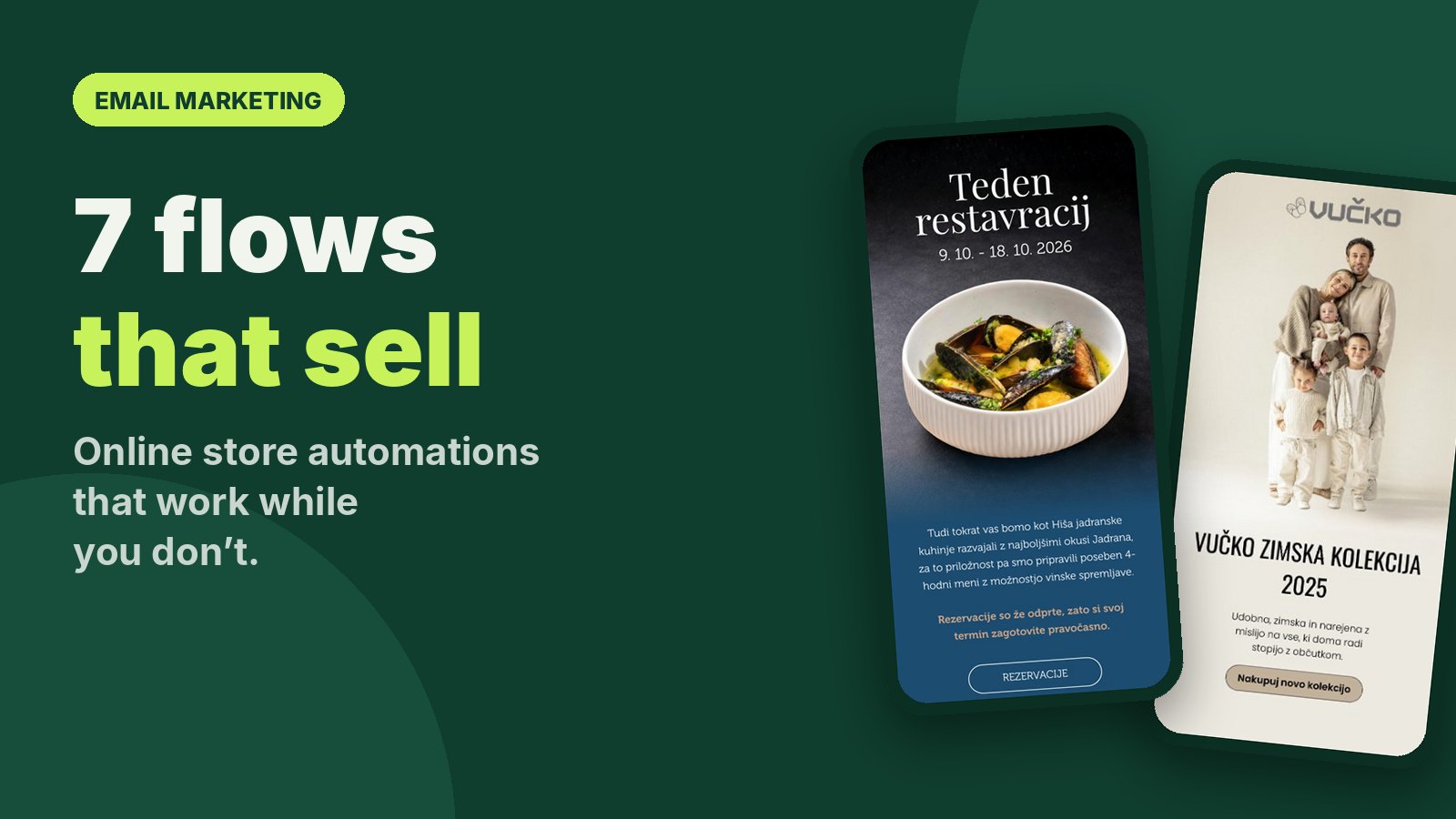
Many online stores rely only on ads and the occasional sale. That means paying for the same customers over and over while money stays on the table. Email marketing changes that: automated flows keep selling while you're busy with other things, and a regular newsletter keeps your store on customers' minds.
The foundation: a proper setup
- A platform that connects to your store: Mailchimp, Klaviyo, MailerLite or Brevo. It needs to see orders and customer behaviour.
- Sending from your own domain, not a free email address.
- Clear expectations at sign-up: what subscribers will receive and how often.
- Revenue tracking: UTM tags on links so analytics shows how much email actually sells.
7 must-have flows
1. Welcome series
New subscribers are most interested right after they sign up. Two or three emails introduce your store, your bestsellers and the reason to buy from you.
2. Abandoned cart
The customer already added a product to the cart but didn't check out. A friendly reminder with the product image and a clear button back is often the most profitable flow in the store.
3. Browse abandonment
When someone views a product several times without adding it to the cart, send a short email with the product, reviews from other customers or similar suggestions.
4. Post-purchase
A thank-you, delivery information and tips for use build trust. A few weeks later, follow up with a complementary product.
5. Reviews and customer content
Once the product has arrived and been tried, ask for a review or a photo. It's the best material you'll ever get for ads and your website.
6. Win-back
Reach subscribers who haven't engaged in a while with news or a special offer. If they still don't respond, remove them from the list to protect deliverability.
7. Back in stock and price drop
Customers who were waiting for a product or a better price are ready to buy. An automatic alert makes sure they hear it from you first, not from a competitor.
Newsletter: once a week
Flows work in the background; the newsletter sets the rhythm. A good formula is simple: one main message, one highlight, a bit of social proof and one clear call to action.
Segmentation to start with
You don't need dozens of segments on day one. Three groups are enough:
- new subscribers (0–30 days),
- recent buyers (purchased in the last 90 days),
- inactive subscribers (90+ days without engagement).
A plan for the first 30 days
- Week 1: choose a platform, connect the store, set up the domain and sign-up forms.
- Week 2: welcome series and abandoned cart.
- Week 3: post-purchase flow, browse abandonment and your first newsletter.
- Week 4: review the results and decide which flows to improve first.
Common mistakes
- sending nothing but sales and discounts,
- emails made of one big image with hardly any text,
- sending everything to everyone, with no segmentation,
- ignoring deliverability: no SPF, DKIM or DMARC and a hidden unsubscribe link.
FAQ
Do I always need to offer a discount?
No. A good story, customer reviews and useful tips often sell just as well, without cutting your margin.
How often should I send a newsletter?
Once a week is a good start. More important than frequency is that every email is worth opening.
Which flows bring results fastest?
The welcome series and abandoned cart. That's why they should be set up first.
Want email marketing that sells on its own? Send us a link to your store. We'll review what you already have and suggest which flows to set up first.